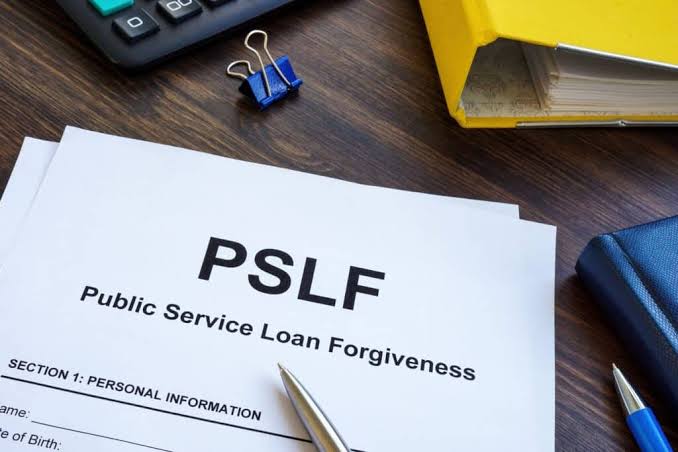
Public Service Loan Forgiveness for Teachers: Who Qualifies and How to Apply
Last updated: August 11, 2026
Quick Answer: Teachers can usually get public service loan forgiveness after 120 qualifying monthly payments made while working full-time for a qualifying public employer, but only when the loan type, repayment plan, and employer all fit the rules. Public service loan forgiveness for teachers: who qualifies how apply is records-driven, not title-driven. For your own situation, check the Federal Student Aid PSLF Help Tool and speak with a qualified adviser if anything is unclear.
Key Takeaways
– 120 qualifying payments are generally required for PSLF.
– PSLF usually applies to Direct Loans.
– Public school teachers are often the clearest fit, but not every school or employer qualifies.
– Private or charter school status must be verified; the label alone is not enough.
– Employment certification matters; missing paperwork can delay or block credit for months.
– Consolidating FFEL or Perkins loans into a Direct Consolidation Loan can change what counts.
– Use the PSLF Help Tool and keep copies of forms, pay records, and loan statements.
Public service loan forgiveness for teachers: who qualifies how apply depends on whether your employer, loans, repayment plan, and payment history all line up. Teach and want the quick read? It often does, but the loan type, repayment plan, employer status, and how your payments were made matter just as much as classroom work. Honest opinion: this is information, not financial advice; for your own situation, I would speak with a qualified adviser or the Federal Student Aid office before making decisions.
What Actually Decides Whether a Teacher Qualifies
A classroom title is not enough. That’s the trap. Public Service Loan Forgiveness, or PSLF, turns on four moving parts at once: employer, loan type, repayment plan, and payment history. Miss one, and the whole thing can fall apart.
For teachers, the first gate is usually the employer. Work for a public school, a public school district, a public charter school that counts as a qualifying public employer, or another government-run educational employer, and you may be on the right track. Private school? For-profit school? An employer outside public service? The answer can flip immediately.
Loans matter just as much. PSLF generally applies to federal Direct Loans. Have Federal Family Education Loan Program loans or Perkins loans? Then you usually need to consolidate them into a Direct Consolidation Loan before payments can count, and yes, that can shift your timeline.
Repayment setup matters too. PSLF is designed to work with income-driven repayment plans and certain other qualifying federal repayment setups. Wrong plan, wrong result. Months of payment may not count even if you paid on time.
One more piece gets missed all the time: you need qualifying full-time employment, or the equivalent across part-time jobs at qualifying employers. “Full-time” is not just your school’s internal label. PSLF uses its own standard.
If You Teach at a Public School, Here’s the Path I’d Check First
Teach full-time at a public elementary, middle, or high school? I’d start with PSLF eligibility before thinking about refinancing or loan consolidation. Public school employees are the clearest PSLF case, but “clear” does not mean automatic. Easy-looking. Not easy.
Here is the path I would follow:
- Confirm your employer is a qualifying public employer under PSLF rules. Do not rely on your pay stub or school name alone.
- List every federal student loan you have. Check whether each one is a Direct Loan or something else.
- Check your repayment plan. If you are not in a qualifying plan, ask about moving to one before making more payments.
- Review whether past payments were made while working full-time for a qualifying employer and whether they were made on time and for the correct amount.
- Submit the PSLF Help Tool forms through Federal Student Aid so your employment can be certified.
- Keep copies of pay records, employment certifications, and loan statements in one place.
That path matters because teachers often leave behind a long paper trail. Grade levels change. So do schools, districts, and sometimes states. PSLF does not care that the work is noble; it cares whether the records line up.
Already been teaching for years? Do not assume you need to start over. Past payments may count if they met the rules at the time. But if you have never certified employment, do that sooner rather than later so you can catch mistakes while records still exist.
A common trap is private consolidation or refinancing. Refinancing federal loans with a private lender can remove federal protections and PSLF eligibility. That is not always wrong for every borrower, but it is a serious trade-off, and I would only compare it with a qualified adviser after you understand the loss of PSLF access.
Quick check: You likely fit this path if you work for a public school or other government employer and all of your loans are federal or can be made eligible through consolidation.
If You Work at a Private or Charter School, the Answer Can Change Fast
Teach at a charter school, private school, or religious school? Don’t guess. Verify the employer first, because this is where teachers most often get surprised.
Some charter schools qualify; some do not. The deciding issue is not the word “charter” on the building. It is whether the employer is a qualifying public service employer under PSLF rules. The same goes for private schools that receive public funding or serve public purposes. A school can sound public and still fail the employment test.
When the school does not qualify, teaching time generally will not count toward PSLF, even if you are doing the same work as a public-school teacher next door. That is the hard part of this program. The job itself is not enough.
Use the PSLF Help Tool and ask your employer’s HR department to complete employment certification. I would not rely on casual verbal confirmation from a principal or department head. School administrators often know academic policy better than loan program rules.
For this path, here is the practical sequence I would use:
- Ask HR whether the employer qualifies as a PSLF public service employer and get the answer in writing if possible.
- Check the school’s legal status, not just its brand name, district partnerships, or funding sources.
- Review your loan types and repayment plan separately; employer eligibility alone is not enough.
- Certify employment through the PSLF Help Tool if the employer appears to qualify.
- If the employer does not qualify, stop assuming your payments count and rethink your long-term repayment strategy with professional guidance.
The standard “teachers qualify” line is too broad. Some do, some do not; the employer structure decides it. A neat slogan, but not a reliable rule.
Quick check: If your school is not clearly public, you need to verify the employer before you count a single month toward PSLF.
The Three Conditions That Change Everything

Want the fastest way to tell whether your past teaching years may count? Sort them by these three conditions: employer, loan type, and payment status. All three have to work together.
| Situation | Best Path | Why Other Options Fail |
|---|---|---|
| Public school teacher with Direct Loans on a qualifying repayment plan | Certify employment and keep making qualifying payments | Refinancing would erase federal loan status and PSLF access |
| Teacher with FFEL or Perkins loans | Check whether consolidation into Direct Consolidation Loan is needed | Old loan types usually do not count directly |
| Teacher at a private or unclear employer | Verify employer eligibility before counting payments | Job title alone does not qualify you |
| Teacher on the wrong repayment plan | Review plan options and move to a qualifying plan if appropriate | Payments on the wrong plan may not count even if on time |
| Teacher with part-time public-school work | Check whether combined qualifying employment meets full-time rules | One part-time job may fall short under PSLF rules |
Mixed employment? Mixed loan types? Time off schedule? Then PSLF is not a simple checkbox. It is a chain of conditions.
The best tool I know for this process is the Federal Student Aid PSLF Help Tool and the loan information in your official servicer account. I would cross-check those with your employment records, not just with memory. Memory gets fuzzy after a few school years; servicer records do not always settle every discrepancy.
A teacher who changes districts can still qualify, but only if both employers qualify and the paperwork keeps up. A teacher who took maternity leave, unpaid leave, or a sabbatical may still have usable months in some cases, but those months need careful review. A teacher who consolidated late may have reset the clock on older loans. Painful? Sure. Still better than finding out years later.
Quick check: If you have had more than one school, more than one loan type, or more than one repayment plan, you need a month-by-month review, not a quick yes-or-no answer.
How to Apply for PSLF Without Blowing the Paper Trail
Think you qualify? Do not wait until the last year. I would apply early, certify often, and keep proof of everything. PSLF is as much an administrative program as it is a forgiveness program.
Here is the process I would follow:
- Log in to your Federal Student Aid account and open the PSLF Help Tool.
- Enter your employer information exactly as it appears on payroll or HR records.
- Generate the employment certification form and have your employer complete it.
- Send the form to your loan servicer using the method the servicer accepts.
- Confirm that your servicer records the employment and qualifying payment count correctly.
- Repeat the certification regularly, especially after job changes, name changes, or loan servicing changes.
Because of that, the hidden risk is document drift. Schools merge. District HR offices change systems. Loan servicers transfer accounts. Wait too long, and one missing signature or old payroll record can snowball.
I would keep these items in one folder, digital and backed up if possible: employment certification forms, pay stubs, W-2s or equivalent tax records, loan statements, and any correspondence with your servicer. If a payment count looks wrong, do not assume the servicer will catch it later. Ask for a review.
And do not let “I’ve been paying for years” fool you into skipping the certification process. PSLF is not self-executing. If the paperwork is missing, the months can fail to count even when the teaching service was real.
Near the forgiveness threshold? Be extra careful about changing repayment plans, leaving the qualifying employer, or refinancing. A mistake near the finish line hurts more than a mistake in year one.
Quick check: If you have not submitted a PSLF employment certification in a while, that is the first thing I would fix.
Edge Cases Where the Usual Advice Breaks Down
Unusual situation? The basic “public school teachers qualify” line may mislead you. These are the cases where I would slow down and verify before acting.
-
Situation: You teach part-time at two qualifying schools. What changes: PSLF full-time rules may allow combined qualifying employment. What to do instead: Confirm that the combined hours meet PSLF’s full-time standard, then certify both employers.
-
Situation: You switched from a public school to a private school. What changes: Only the months at the qualifying employer may count. What to do instead: Separate the qualifying years from the nonqualifying years and certify the public-school period first.
-
Situation: Your loans were in deferment, forbearance, or a grace period. What changes: Those months often do not count the same way as qualifying payments. What to do instead: Review each month with your servicer and the PSLF rules before assuming progress.
-
Situation: You consolidated loans after years of teaching. What changes: The consolidation date may affect which payments count. What to do instead: Ask for a fresh payment-count review and do not assume older loan history carried over automatically.
-
Situation: Your school says it is “public” but your payroll comes from a private management company. What changes: The legal employer may be the management company, not the school itself. What to do instead: Verify the actual employer of record before you certify anything.
-
Situation: You left teaching and came back later. What changes: PSLF does not require continuous employment, but only qualifying months count. What to do instead: Pick up where you left off if the prior months were valid, and certify the new employment period separately.
This is the part generic articles skip, and it matters because teachers often have messy career paths. PSLF can still work, but only if you match the rules to the real history.
Quick check: If your career has included job changes, mixed employers, or loan changes, treat PSLF like a records problem first and a forgiveness problem second. If needed, consult a PSLF-certified student loan counselor or Federal Student Aid before relying on a month count.
The Mistakes I’d Avoid If I Were You
Shortest version: do not refinance federal loans before checking PSLF, do not assume a charter or private school qualifies, do not guess about your repayment plan, and do not wait to certify employment.
A few more traps deserve plain language:
- A teacher can do the same work as a public-school teacher and still be ineligible if the employer does not qualify.
- A federal loan can still be the wrong federal loan type for PSLF until it is consolidated correctly.
- A payment can be on time and still not count if the repayment plan is wrong.
- A qualifying employer can still leave you with missing months if the employment form was never filed.
If you are tempted to make a fast repayment move because you feel behind, I would pause and check the PSLF rules first. Once you change the loan structure, you may not be able to undo it.
For authoritative guidance, I would start with the U.S. Department of Education’s Federal Student Aid PSLF page and the PSLF Help Tool. The Consumer Financial Protection Bureau also has plain-language information on student loans that can help you sort through servicer language. If your loans are complicated, a qualified financial adviser or student loan counselor can help you review the consequences.
Quick check: If any part of your plan depends on a guess, stop and verify before you pay, consolidate, or refinance.
FAQ
Do all teachers qualify for PSLF?
No. Teachers at qualifying public employers may qualify, but the employer, loan type, repayment plan, and payment history all have to meet PSLF rules.
Do private school teachers qualify?
Sometimes, but not automatically. The school must qualify as a PSLF public service employer. I would verify the employer status first.
Do I have to make 120 payments in a row?
No. PSLF generally cares about qualifying payments over time, not whether they are consecutive, as long as they meet the program rules.